
Jigsort®: Solitaire
EasyFun Puzzle Game StudioPuzzle
4.9344.00 Reviews
- Version
- 1.2.1
- Installs
- 1.00M
- Age Rating
- Everyone
Screenshots
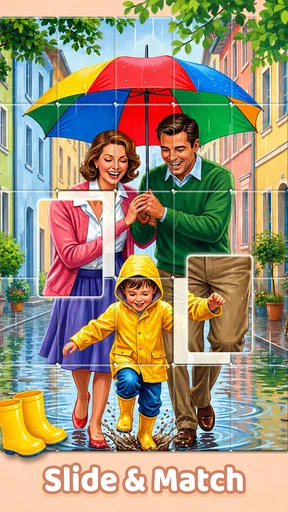
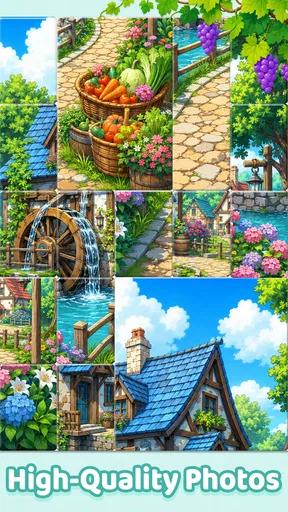
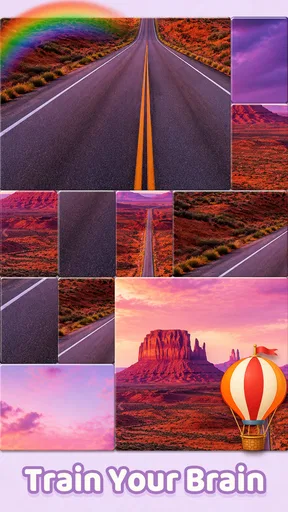
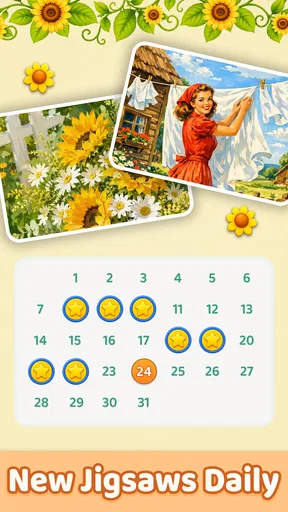
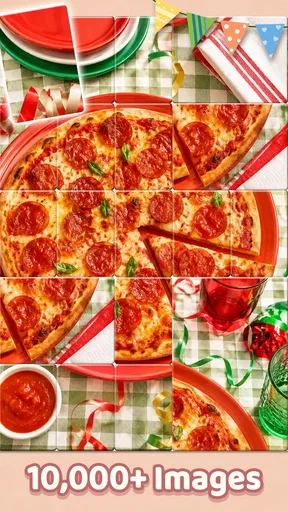
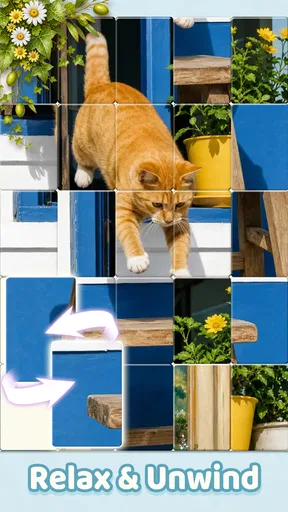
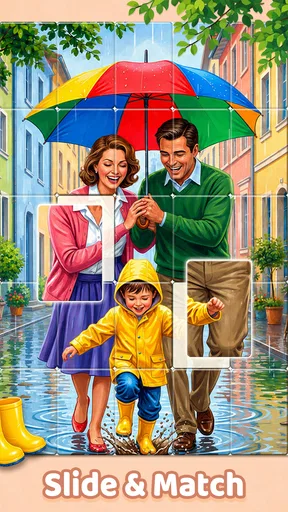
Our Review of Jigsort®: Solitaire
 Analysis by Appyee
I found Jigsort®: Solitaire appealing for a very specific reason: it makes picture puzzles feel less demanding than a traditional jigsaw. Instead of picking up loose pieces and searching for matching edges, I slide and arrange cards until the image comes together. That small change gives the game a calmer rhythm, and it makes the first few minutes easy to understand even if you do not usually play puzzle games.
This is a free puzzle game from EasyFun Puzzle Game Studio, aimed at Everyone. It is available for devices running Android 6.0 or later, and the current version is 1.2.1. The game has already passed one million installs and holds a 4.9 average from around 141 thousand ratings, which suggests that its simple format has connected with a large audience. I would not treat those figures as a guarantee that every player will love it, but they do fit my impression: this is designed to be approachable before it is challenging.
What the first few minutes feel like
When I first approached the game, I did not need to learn a long rule set. The central idea is visual: cards are placed in the wrong order, and I move them to rebuild a picture. The important distinction is that I am not solving a conventional jigsaw with irregular pieces. I am working with an organized set of movable cards, so the task is closer to sorting, recognition and planning than to hunting for tiny shapes.
That makes the game a good fit for short breaks. I can start a puzzle while waiting for an appointment, play for a few minutes before bed, or use it as a gentle reset after concentrating on work. The experience does not demand the same sustained attention as a competitive game, yet it still gives me a clear objective. Each correct arrangement makes the final image feel closer, which provides a steady sense of progress.
The visual nature of the challenge also changes how I think. I am looking for colors, lines, repeated patterns and the way one card continues into another. A bright border, a diagonal object or a distinctive patch of texture can become an anchor. Once I find one useful relationship, the rest of the layout often becomes easier to reason about.
The best way to approach the game is to treat the picture as a map, not as a pile of random cards. Before moving anything repeatedly, I look for obvious corners, strong color changes and objects that clearly cross from one card to another. This reduces unnecessary shuffling and makes the first success feel earned rather than accidental.
Who will enjoy this format
I would recommend it to someone who likes the satisfaction of jigsaw puzzles but dislikes the mess, storage and slow searching that physical pieces can involve. It also suits players who want a puzzle that can be understood without reading instructions for several minutes. The Everyone rating reinforces that accessible presentation, although personal comfort with visual sorting will still vary.
It is especially suitable for people who enjoy quiet, image-based tasks. If you like spotting patterns, organizing objects or completing a picture one small decision at a time, the structure is immediately inviting. Parents looking for a simple puzzle concept to explore together may also find the basic interaction easy to demonstrate, though the right difficulty will depend on the individual player.
On the other hand, I would skip it if what you really want is a story, a competitive leaderboard, fast reactions or a deep logic system. The appeal comes from arranging images, not from character progression or action. Players who prefer traditional jigsaws with irregular pieces may also find the card-based format less tactile and less spatially rich than the real thing.
Getting started without overthinking the setup
The first setup is refreshingly small. After installing the game, I would begin with the basic puzzle rather than trying to develop a perfect method immediately. The point of the opening session is to understand how the cards behave when moved and how the completed picture guides the solution.
For a first-time player, the most useful preparation is mental rather than technical. Give yourself a moment to inspect the whole arrangement. Notice whether a card contains a unique color, a straight edge, a recognizable object or a continuation of a large shape. These details are more helpful than moving cards at random, especially when several pieces look similar.
I also recommend using a two-stage approach. First, make broad corrections by placing cards that obviously belong near one another. Then refine the uncertain areas by comparing lines and textures. Trying to solve every position with absolute certainty from the beginning can make a relaxed game feel unnecessarily complicated.
One practical habit is to preserve information. If you discover that two cards clearly belong together, remember their relationship even if you need to move one temporarily. This is more efficient than repeatedly rediscovering the same match. It also helps when several cards share similar colors and the picture does not provide an immediate answer.
Because the game is free, it is easy to try without committing money first. That makes it suitable for a quick test: install it, complete an early picture and decide whether the interaction feels satisfying. I would judge it less by the promise of endless novelty and more by whether the act of arranging cards feels pleasant to you.
The first meaningful success
The first successful action usually comes from identifying a relationship that is visually undeniable. I might notice that a line continues from one card into the next, or that a distinctive object has been split across neighboring positions. Once those cards are placed together, the puzzle stops looking like a collection of unrelated squares.
That moment is important because it teaches the game’s real skill. I am not simply searching for identical colors. I am comparing continuity. A road, branch, building edge, cloud or piece of clothing can extend across several cards, and following that extension gives me a reliable route through the puzzle.
For a smoother first attempt, I would scan for the strongest visual anchors in this order:
- Cards with unusual colors or large, recognizable objects.
- Lines that visibly continue across a boundary.
- Cards that appear to belong at an outer edge or corner.
- Small texture changes that confirm a suspected neighboring pair.
This order is useful because it moves from high-confidence decisions to subtle ones. I do not need to solve the entire picture in a single burst. A few secure placements can reveal the structure around them, and that structure makes the remaining choices less intimidating.
My advice is not to chase speed during the first puzzle. A fast accidental arrangement teaches less than a slower solution in which I understand why the cards fit. Once the visual logic becomes familiar, the pace naturally improves. The game works best when completion feels like a quiet discovery rather than a race against the interface.
Where new players can become confused
The main source of confusion is that neighboring cards may share almost the same color. A blue sky, a green field or a patterned background can appear interchangeable at first glance. In those situations, I stop judging cards by their overall color and inspect the smallest visible details: a curve, a shadow, a change in texture or the direction of a line.
Another common mistake is moving too many cards before understanding the layout. Random rearrangement can create the impression that the puzzle is becoming harder, when the real problem is that useful relationships have been lost. I get better results by making one deliberate change, checking the broader picture and then deciding whether to continue.
It is also easy to focus on a visually attractive area and ignore the rest. A striking object may help, but it does not always reveal its exact position immediately. When that happens, I use it as an anchor rather than forcing it into a final location. I connect the obvious parts first and return to the uncertain image later.
Players accustomed to ordinary jigsaw puzzles may initially look for irregular edges or physical piece shapes. That approach does not transfer perfectly here. The cards are better understood through image continuity and position. Once I stop searching for traditional jigsaw cues, the game becomes clearer and less frustrating.
There is a useful trade-off in this design. The card format lowers the barrier to entry, but it can also make some mistakes feel less informative than in a classic jigsaw. A physical piece may be rejected by its shape; a card may look plausible until the surrounding image proves otherwise. I therefore rely on the complete picture more heavily than I would with a tabletop puzzle.
How I handle a difficult-looking picture
When a puzzle becomes less obvious, I divide the image mentally into zones instead of trying to compare every card with every other card. I might work on the upper area first, then a distinctive central object, then the background. This keeps the search manageable and prevents similar-looking cards from competing for my attention all at once.
A second helpful technique is to look for transitions rather than isolated details. The meeting point between two colors can be more informative than either color alone. For example, a pale area next to a dark outline may identify a neighboring card even when both pieces contain mostly ordinary background.
I also avoid assuming that the most detailed card belongs in the center. A small, sharp feature may sit near an edge, while a broad, less interesting region fills the middle. Let the surrounding continuity decide. This is one of the places where patience matters more than visual speed.
If I feel myself making the same move repeatedly, I take that as a signal to reset my approach. I inspect the full image again, identify a new anchor and work outward. That small pause is more productive than continuing to shuffle cards with no fresh information.
Using the game in everyday life
A realistic use case is a short evening break when I want something more engaging than passive scrolling but less intense than a conventional game. I can open a puzzle, focus on a few visual relationships and stop after reaching a satisfying point. The clear picture-based goal makes it easy to return later without needing to remember a complicated story or control system.
It can also work as a shared activity. One person can identify a likely match while another watches for a line or color transition. That makes the game conversational without requiring both people to master a complex control scheme. I would use it this way with someone who enjoys visual puzzles but does not usually play mobile games.
For concentration breaks, I find the sorting element more useful than a completely passive relaxation app. There is enough decision-making to hold my attention, but the subject remains calm. The trade-off is that the same gentle pace may feel repetitive if I am looking for constant surprise.
How it compares with ordinary puzzle alternatives
Compared with a physical jigsaw, this game is cleaner and quicker to begin. There is no table to clear, no pieces to turn over and no need to protect an unfinished picture from being disturbed. The digital card format also makes a short session practical. The cost of that convenience is a reduction in tactile satisfaction and, for some players, a weaker sense of physically building an object.
Compared with crossword or number puzzles, the challenge here is less dependent on language and calculation. That makes it friendlier when I want a visual task, but it also means the difficulty is tied closely to image clarity. Someone who prefers deduction through clues may find a word or logic puzzle more rewarding.
Compared with fast mobile games, it is far less demanding on reflexes. I do not need to react quickly or compete for attention. That is a strength for relaxed play, but a weakness for anyone who wants urgency. The game’s success depends on whether you value calm visual progress over dramatic escalation.
Even among picture puzzles, this approach stands apart from a standard piece-fitting design. I spend more time recognizing sequences and neighboring cards than testing physical shapes. If you enjoy sorting and visual organization, that distinction is welcome. If the shape of each piece is the main pleasure of jigsaw solving, a conventional alternative may suit you better.
What to expect as you continue
After the first successful puzzle, I would keep improving the same core habit rather than searching for a complicated strategy: establish reliable anchors, preserve confirmed relationships and use the entire image to check local decisions. This approach scales better than random movement because it gives every action a reason.
The current version is 1.2.1, and the game’s large install base makes it feel like a familiar choice within casual puzzle gaming. Still, I would keep expectations realistic. The central interaction remains the reason to stay, so your long-term enjoyment will depend on whether arranging picture cards continues to feel satisfying after the novelty of the first session fades.
One subtle strength is how easily the game lets me adjust my level of effort. I can solve carefully by studying every transition, or I can make broad placements and let recognition guide me. That flexibility makes it more suitable for changing moods than a puzzle that demands a fixed amount of concentration every time.
The main limitation is equally clear: the format may not provide enough variety for players who need narrative rewards, elaborate progression or a strong sense of mastery. I would also avoid choosing it as my primary game if I want social competition or a demanding brain-training routine. Its value is in focused, approachable picture sorting, not in covering every kind of puzzle experience.
My recommendation for a first download
I think Jigsort®: Solitaire is worth trying if you want a free, accessible way to rebuild pictures through simple card movement. My recommended first session is short: inspect the image, find one unmistakable visual connection, place it carefully and then work outward from that anchor. That path gives a new player a meaningful success without making the opening feel like a test.
EasyFun Puzzle Game Studio has chosen a focused idea rather than an overloaded one. For me, that focus is the attraction. The game is easy to pick up, calm enough for everyday breaks and different enough from a physical jigsaw to feel convenient on a phone. It is not the right choice for every puzzle fan, but if visual sorting sounds more appealing than timed action or word clues, I would happily recommend giving it a try.
My final judgment is favorable with one condition: come for the quiet satisfaction of seeing a picture take shape, not for a complex system surrounding it. If that simple loop matches what you want, the Everyone rating, free entry and broad audience make the decision straightforward. If you need constant novelty or deeper mechanics, look elsewhere; this game earns its place through clarity, not excess.
Verdict
Strengths of Jigsort®: Solitaire
- Relaxing gameplay suitable for short or extended sessions.
- Simple controls make it accessible for casual players.
- Solitaire elements add variety beyond standard jigsaw puzzles.
- Progression can provide a satisfying sense of completion.
- Works well for players who enjoy quiet, single-player challenges.
Limitations of Jigsort®: Solitaire
- Some puzzles may feel repetitive after extended play.
- Difficulty can vary noticeably between individual puzzles.
- Frequent hints may reduce the challenge for experienced players.
- Puzzle completion can become time-consuming on larger images.
- May appeal less to players seeking competitive or multiplayer features.
Similar Picks in This Category
View All
Block Blast!
HungryStudio4.8

Braindom: Brain Games Test
Lahana Game Studio4.6

AMAZE!
CrazyLabs LTD4.6

Sudoku - Classic Sudoku Puzzle
Oakever Games4.7

Art Puzzle - Puzzle Games
Easybrain4.8

Amaze GO!
Oakever Games4.9
Frequently Asked Questions
What is Jigsort®: Solitaire, and how is it different from traditional solitaire games?
Jigsort®: Solitaire combines classic solitaire-style card play with a jigsaw-inspired sorting mechanic. Instead of simply arranging cards into standard foundations, you work through visually organized puzzles that require planning, matching, and careful sequencing. The presentation makes each level feel more like a short brain-training challenge than a conventional card session, which can appeal to players who enjoy relaxing gameplay with a little extra problem-solving.
Is Jigsort®: Solitaire free to download and play?
The game can generally be downloaded for free, allowing you to try its core levels without paying upfront. However, free-to-play games commonly include advertisements, optional purchases, or both. These may provide extra hints, remove ads, or offer additional resources. Before downloading, it is worth checking the current store listing for the exact purchase options, advertising policy, and whether any features or content require payment.
Can I play Jigsort®: Solitaire without an internet connection?
Some parts of Jigsort®: Solitaire may remain available offline, particularly previously loaded single-player levels, but offline access can depend on the version installed and the developer’s current requirements. Internet access may still be needed for advertisements, events, cloud synchronization, updates, or in-app purchases. If you plan to play while traveling, open the game online first and test whether the levels you want are accessible without a connection.
Is Jigsort®: Solitaire suitable for beginners and casual players?
Yes, the game is designed to be approachable for people who enjoy casual puzzles and solitaire-inspired challenges. Early stages typically introduce the main mechanics gradually, so you can learn how cards, pieces, or moves interact before the difficulty increases. Even so, later puzzles may require more deliberate planning. Players looking for a completely traditional solitaire experience should expect a more modern, level-based format with additional visual and puzzle elements.
Does Jigsort®: Solitaire contain ads, optional purchases, or privacy considerations?
As with many free mobile puzzle games, Jigsort®: Solitaire may include advertising and optional in-app purchases. Ads can appear between levels or when you request bonuses, while purchases may offer hints, boosters, extra lives, or an ad-free experience, depending on the current release. You should also review the app-store privacy section before installing, especially if you are concerned about analytics, personalized advertising, permissions, or data shared with third parties.
Play our best games!


